

As debates about energy policy swirl in Washington and state capitals, one thing is increasingly clear: clean energy is the fastest, most cost-effective engine for affordable, reliable energy in the United States.
The numbers tell the story. Most recently, Winter Storm Fern proved how clean energy saves money when people need it most. Clean resources with marginal fuel costs like wind and solar saved consumers $2+ billion during the storm.
In 2024, the U.S. clean power industry delivered nearly 49 gigawatts of new capacity, a 33% increase from the previous year, expanding America's total clean energy fleet and helping the grid add more new capacity than ever before. Last year, over 90 percent of new capacity additions were clean energy resources.
The impact goes far beyond the gigawatts. Clean energy job growth is outpacing the broader economy. Recent analyses show that clean energy employment grew more than three times faster than the overall workforce in 2024, adding new career opportunities for millions of Americans. According to American Clean Power (ACP), the clean energy sector supports 1.4 million American jobs, spanning development, construction, operation, maintenance, and manufacturing.
What's more, clean energy deployment has attracted more than $690 billion in investment, reinforcing the sector's role as a cornerstone of American competitiveness.
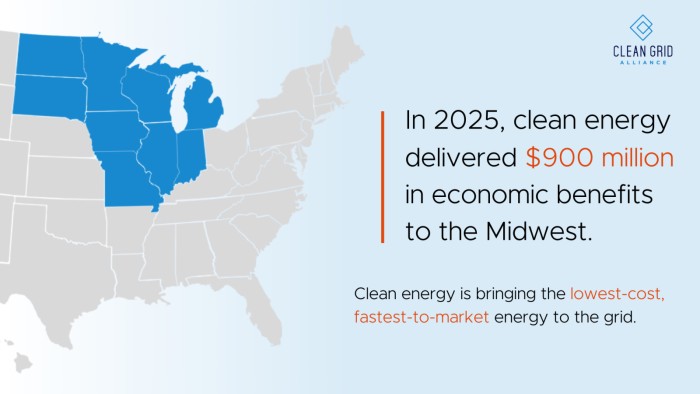
In communities across the Midwest, wind and solar projects are not only powering homes but revitalizing local economies. At CGA, we've seen firsthand how clean energy drives job creation, boosts local tax bases, and helps Midwestern states compete in a global economy. In 2025, our region benefited from approximately $900 million in tax revenue and direct lease payments to landowners from clean energy projects. Rural communities stand to benefit the most as the property taxes paid by clean energy projects often represent a huge portion of the local tax base.
All of this is to say: Clean energy is ready to meet the moment. Wind and solar are the lowest-cost sources of unsubsidized electricity generation in most regions. Their rapid deployment has lowered capital costs and made clean energy a smart choice for corporate purchasers, including the long list of Fortune 500 companies that contracted gigawatts of clean power last year. The market is speaking through companies that are betting on clean energy because they know it delivers results.
Yet some policymakers still frame clean energy as high-risk or expensive, which is a narrative that is increasingly disconnected from reality. Unnecessary project delays cost more than just time; they cripple our energy grid and our economy. A recent study found that if there is no clean energy development in the nine-state PJM region over the next decade, ratepayers will pay an additional $360 billion, with average residential households seeing $3,000 to $8,500 in additional electricity costs.
Subscribe to our newsletter for the latest on energy & our work
Delayed projects only accelerate the risks associated with an aging and increasingly fragile power grid. Delays mean more blackouts and higher energy bills, not to mention delayed jobs, delayed investment, and delayed economic growth.
It's time to build the affordable energy resources that will power the next era of American innovation. Clean energy creates jobs faster than most sectors, reduces energy costs, attracts investment, and enhances national competitiveness. As demand for electricity grows, so does the opportunity to power America with clean, reliable, affordable energy.
The future is here. Let's get to work.